How to Create an Elevated Home Without Overfurnishing
An elevated interior is not defined by the number of objects it contains, but by the confidence and clarity of its composition. The most refined homes allow architecture, furniture and materials to breathe, creating a sense of calm without feeling sparse or unfinished.
The objective is not simply to remove. It is to choose more carefully.

Before selecting furniture, consider how each piece relates to the scale of the room. A large space does not necessarily require more furniture; it often benefits from fewer pieces with greater presence. An oversized sofa, a sculptural armchair or a generously proportioned dining table can anchor a room more effectively than several smaller items. Allowing space around each piece gives it greater definition and makes the overall composition feel intentional.
Negative space is equally important. Clear sightlines, open circulation and areas of visual pause prevent a room from becoming crowded. These quieter moments allow the architecture and natural light to become part of the design.

Choose Pieces with Presence
When furniture is limited, every selection carries more weight. Form, material and craftsmanship therefore become essential. A beautifully curved sofa can introduce softness to a linear room. A hand-finished timber table can bring depth and warmth, while a single piece of expressive stone may provide all the visual interest a space requires. Furniture should contribute character, not simply fill an empty area.
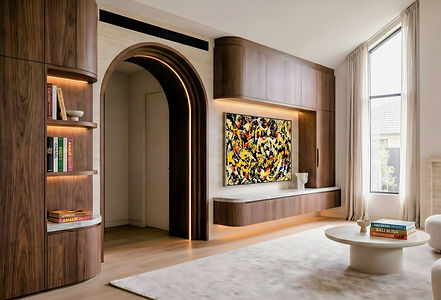
This is where bespoke design can be particularly valuable. A custom piece responds precisely to the proportions of the room and can combine several functions without adding visual clutter. Integrated joinery, concealed storage and carefully designed media walls allow practical elements to sit quietly within the architecture.

Create Layers Through Materiality
A restrained interior should never feel flat. Instead of introducing more objects, build richness through texture and contrast. Pair smooth stone with tactile upholstery, polished metal with natural timber, or softly woven curtains with a structured architectural backdrop. A tonal palette can feel highly expressive when materials absorb and reflect light differently.
Art also plays an important role. One significant artwork can bring energy, colour and identity to a room without disrupting its calm. The same principle applies to decorative objects: a small number of meaningful pieces will feel more considered than a collection spread across every surface.